Sometimes these blog posts are hard to write. Actually, now I've set a (reasonably) strict schedule, more for myself then any one else, they're a struggle most of the time. Especially when I don't have an awful lot to say about something. This has led to Film Roundups and posts like these where I just collect comments on various shows which don't justify a post on their own. For example, new BBC show Family Tree, starring Chris O'Dowd, is really funny. There's not a lot more to say without simply listing my favourite jokes (personal highlights are the brilliant parodies of naff television genres that are used as background for the most part, proving how good the comedy is in this show). So go and watch that. Not particularly groundbreaking but it made me laugh and just a thoroughly likable show.
A programme that many, many people watched was of course, Doctor Who Live: The Next Doctor. While I've only just watched it on iPlayer, even on holiday in the mystical realms of York I managed to find out Peter Capaldi was cast. (By the way, great choice, can't wait for the specials, really excited to see what he does.) To be honest, it seems like it was the best way to find out as I didn't have to put up with over twenty minutes of cheesy television just for a five minute exclusive interview. While those five minutes were great, the rest was... well it was just naff, wasn't it?
Don't get me wrong, it was nice but really, what was the point? Hype basically. The whole show was like a child shouting at you "Isn't Doctor Who the best show ever?". Which, fair enough. I mean, I love it so of course I'm inclined to forgive it for behaving like that and its famous enough to not seem utterly moronic. But honestly, I would have been happy with the way they did it with Matt Smith - a far more understated programme that had a similar message (there's not much deviation possible with an announcement like this) but wasn't shoved so much down your throat. Of course, the reason it was making so much noise was because people would have actually heard of the actor this time.
So, basically, I'm not blaming the programme for how it did the announcement but it was still pretty empty. While Bernard Cribbins is always a joy to watch and it was great to see Rufus Hound being an unashamed geek, these moments of charm didn't hide the fact that it was all just a delay tactic that probably pissed a lot of people off. They just want to know who the Doctor is goddamit! Nice enough but honestly, it really needed to settle down a bit. Yes it's all exciting but there's no need to scream it in our faces. We want to scream as loud as it did but we know that's really annoying for 30 minutes. Still, at least people seem genuinely excited about all this. That's always nice to see.
Meanwhile, a programme that doesn't seem to be quite as popular proves to be just as charming. Folk at the BBC (available on iPlayer until next Saturday)has some truly lovely performances as you'd expect, but I was surprised to see other archive material that provides some context for the reception of folk music in Britain. While I'm unashamed to admit chuckling at the pure 60s-ness of the conversations (folk musicians are genuinely described as long-haired ruffians - proof that stereotypes, no matter how ridiculous, will always be believed in by someone), it is also really fascinating to see this footage.
There is a frankness in the coverage that is refreshing in comparison to Doctor Who Live. There's no incessant fawning here, people say what they feel and with real force which often seems lacking whenever anything cultural is covered in mainstream media. With shows like The Review Show and The Culture Show being awfully treated, there is real neglect for an audience interested in learning what is new in literature, music, film, television, theatre etc. Beyond radio show Front Row and the aforementioned shows, there are few programmes that exist for this audience that I would consider myself a part of.
Obviously, it is better to give more room to cultural content rather than shows about cultural content, but I always enjoy seeing people really passionate about the arts and as such when they occur (such as Danny Baker's lambasting on the BBC selling Television Centre in Goodbye Television Centre) I feel reassured that such people do exist. But it would be nice to not have to be reassured and see them as more prominent figures instead of being shoved onto increasingly neglected BBC 4. Speaking of which, one of its final original dramas Burton and Taylor was great and demonstrates why it is a tragedy that it is no longer allowed to continue producing some of the best programmes on the BBC.
Oh, and finally my thoughts on the final three episodes of The Returned, which is still one of my favourite television shows at the moment. (Considering the amount of television I watch is pretty small, this isn't much praise, but it's still an extraordinary piece of work). Its gradual buildup of tension and horror explodes in a truly unnerving piece of horror in the final episode. In this show, though, an explosion of horror just means that the chills and shivers are more frequent as it continues to skilfully use violence as shocking rather than unpleasant as bad horror does.
The standoff in the final fifteen minutes or so is incredibly tense and the highlight of the series. Dramatic in its own right, it is also packed with thematic significance as it provides a climax to the buildup of the series. As I predicted, the first series ends on a cliffhanger but it's not frustrating but suitably enigmatic. The only frustration is for the waiting for the next series. There are resolutions here but they are not final. The series has taken the first step in its story and its one that I hope will continue to be riveting, unsettling drama.
Now I know that people read these (or I look at them more often then I realise) so I'm going to ask for some advice on a future post. I definitely intend to talk about Southcliffe soon but I've been debating whether to start with The Mlll first, as it's already aired two of its four episodes. Has anyone seen it and what did you think? It'd be nice to actually know what my audience thinks so don't be afraid to comment.
Showing posts with label television. Show all posts
Showing posts with label television. Show all posts
Friday, 9 August 2013

Friday, 2 August 2013
A Poet's Guide to Britain (BBC 4, Sunday, 9PM)
Despite this programme being several years old now, it is only the latest repeats on BBC 4 that I discovered this program. Looking at the program in light of the cuts and mistreatment the channel has had, the programme appears to represent the best qualities of the channel and the lack of encouragement it has experienced. Aimed at its typical cultural and creatively inclined audience, the programme explores areas of Britain through the perspective of various poems across the six episodes by poets such as William Wordsworth and Sylvia Plath.
Presented by poet Owen Sheers, he struggles to avoid the cliches associated with documentary presenters (talking about journeys, describing history in the present tense, unnecessary dramatic pauses- essentially everything Peter Capaldi parodies in the excellent The Cricklewood Greats). As such, he struggles to stand out and doesn't leave much of an impact as a presenter.
He's not helped by the programme wasting much of its running time being mini-documentaries about the poet's life, when his and the programmes strengths really shine when focusing on the poems themselves. The highlights are when Sheers is able to wax lyrical on the poems and relates the poem to its location. More of this would make it a must see for all poetry fans, surely the target audience. The programme works best when the biographical elements are used as context to enlighten the poems reading.
I'm fully ready to admit that this criticism is down to personal taste. It is almost certainly the literature geek in me that actually enjoys examining and analysing poetry rather than author's biographies. However, I exaggerate my dislike for them as they are usually interesting in their own right - I am fascinated how creative minds work and what fuels their creativity. As I say, they are interesting enough here but I feel the programme really needed to push its ambitions. The idea of using a poem to comment on the British landscape has potential that is squandered when biographic information is so abruptly used - it gives the impression of being forced as a tenuous link to its ambition.
Nevertheless, they are only half an hour long and enjoyable enough to not outstay its welcome.
Presented by poet Owen Sheers, he struggles to avoid the cliches associated with documentary presenters (talking about journeys, describing history in the present tense, unnecessary dramatic pauses- essentially everything Peter Capaldi parodies in the excellent The Cricklewood Greats). As such, he struggles to stand out and doesn't leave much of an impact as a presenter.
He's not helped by the programme wasting much of its running time being mini-documentaries about the poet's life, when his and the programmes strengths really shine when focusing on the poems themselves. The highlights are when Sheers is able to wax lyrical on the poems and relates the poem to its location. More of this would make it a must see for all poetry fans, surely the target audience. The programme works best when the biographical elements are used as context to enlighten the poems reading.
I'm fully ready to admit that this criticism is down to personal taste. It is almost certainly the literature geek in me that actually enjoys examining and analysing poetry rather than author's biographies. However, I exaggerate my dislike for them as they are usually interesting in their own right - I am fascinated how creative minds work and what fuels their creativity. As I say, they are interesting enough here but I feel the programme really needed to push its ambitions. The idea of using a poem to comment on the British landscape has potential that is squandered when biographic information is so abruptly used - it gives the impression of being forced as a tenuous link to its ambition.
Nevertheless, they are only half an hour long and enjoyable enough to not outstay its welcome.
Friday, 19 July 2013
The Returned (Channel 4, Sunday, 9PM)
The popularity of foreign television dramas like The Killing and slow-burn mysteries like Broadchurch suggests that Channel 4's broadcasting of French drama The Returned is an attempt to cash in on these trends. However, The Returned is a truly unique piece that provides the perfect example for why more foreign television should be made aware to the general British public.
 A plot synopsis alone demonstrates the peculiarity of the show: the drama follows a number of individuals who return to their hometown, only to find out that they have been dead for years. Many summaries and discussions of the show describe these individuals as zombies, which to me is inaccurate. Zombies are mentioned twice in the first six episodes, while ghost is a much more common term although the eeriness of the drama lies in the lack of explanation of who/what the Returned are. If we look at the untranslated title - Les Revenants - it is clear that they are meant to be considered for the most part as ghosts, particularly as this is what the word 'revenant' alludes to.
But the supernatural element is not the main focus of the show. Much like Broadchurch, The Returned presents its genre through the perspective of an ordinary community and uses to explore the relationships of the characters. While there are some dream-like imagery (such as the butterfly coming to life in the first episode), the show makes the supernatural ordinary and rather than asking what caused the return, it presents how the characters try to incorporate it into their lives. Rather than mystifying or frustrating, the plot gradually unravels with ease as it draws you in with its atmosphere and characters. The one misstep is the ongoing plotline at a plantation which doesn't tie into any of the plot lines. It is either a red herring or an important part of the story, but at the moment it's the one jarring aspect to the production.
The performances are fantastic across the board. The potential for confusion and forgetting who is who is reduced by the memorable performances and extraordinary writing. The child actors are particularly impressive. Yara Pilartz as Camille is arguably the lead character (although the show is generally based on an ensemble cast) as her story begins the series but she also lends some comic relief when she's not pushing the drama forward. Swann Nambotin as "Victor" is also strikingly memorable, saying very little but really has a lingering presence on screen that is at once charming and unnerving.
This effect is generated by the superb direction throughout the series. There is real confidence behind the camera which isn't afraid to linger on uncomfortable moments. The murders that occur are suitably horrifying and disturbing in their violence. Yet there is also a distanced perspective, letting the characters tell the story and grounding the show rather than overstylising it. The moments of surrealism and bizarre imagery are striking but feed into the drama and emphasise the peculiarities of the world it depicts. Considering how alienating the material could be, it is impressive that it remains gripping throughout, with endings that leave you longing for more.
I intend to post on the final episodes once they have aired, but safe to say this is one of the best dramas I've seen this year and is well worth catching up on as we approach the finale of this first series. As I'm now aware there is going to be a second series, I'm curious to see how much will be resolved by the end of this series. As long as its not a massive cliffhanger that I'll then have to wait months for a resolution to - I don't think my nerves could take it.
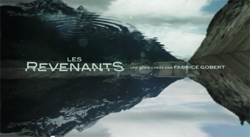
But the supernatural element is not the main focus of the show. Much like Broadchurch, The Returned presents its genre through the perspective of an ordinary community and uses to explore the relationships of the characters. While there are some dream-like imagery (such as the butterfly coming to life in the first episode), the show makes the supernatural ordinary and rather than asking what caused the return, it presents how the characters try to incorporate it into their lives. Rather than mystifying or frustrating, the plot gradually unravels with ease as it draws you in with its atmosphere and characters. The one misstep is the ongoing plotline at a plantation which doesn't tie into any of the plot lines. It is either a red herring or an important part of the story, but at the moment it's the one jarring aspect to the production.
The performances are fantastic across the board. The potential for confusion and forgetting who is who is reduced by the memorable performances and extraordinary writing. The child actors are particularly impressive. Yara Pilartz as Camille is arguably the lead character (although the show is generally based on an ensemble cast) as her story begins the series but she also lends some comic relief when she's not pushing the drama forward. Swann Nambotin as "Victor" is also strikingly memorable, saying very little but really has a lingering presence on screen that is at once charming and unnerving.
This effect is generated by the superb direction throughout the series. There is real confidence behind the camera which isn't afraid to linger on uncomfortable moments. The murders that occur are suitably horrifying and disturbing in their violence. Yet there is also a distanced perspective, letting the characters tell the story and grounding the show rather than overstylising it. The moments of surrealism and bizarre imagery are striking but feed into the drama and emphasise the peculiarities of the world it depicts. Considering how alienating the material could be, it is impressive that it remains gripping throughout, with endings that leave you longing for more.
I intend to post on the final episodes once they have aired, but safe to say this is one of the best dramas I've seen this year and is well worth catching up on as we approach the finale of this first series. As I'm now aware there is going to be a second series, I'm curious to see how much will be resolved by the end of this series. As long as its not a massive cliffhanger that I'll then have to wait months for a resolution to - I don't think my nerves could take it.
Friday, 5 July 2013
The Village (BBC)
Since this series is coming out on DVD soon, I thought I'd let you know why this is worth your time.

In brief, The Village focuses on, well, a villag,e during the 1910s with a specific focus on the Middleton family and the youngest boy Burt Middleton, who is being interviewed as he is now the oldest man in the world. This framing device is unconvincing and acts only as a forced prelude to the episodes, which do not benefit from it at all. Nevertheless, as the popularity of Broadchurch proved, great drama can be found in exploring relations within a close community and taking its time to explore the nuances within them.
The series begins with the arrival of the first bus to the village which to most people's surprise actually has someone on it. Change seems to be what drives the drama throughout this series as events beyond the characters control affect their way of life, notably the First World War. Writer Peter Moffatt avoids patronising or sentimentalising rural life and the class differences within it. In fact, it avoids cliche and stereotype altogether by remaining true to its characters and settings - even the seemingly angelic and perfect Caro Allingham is revealed to be a far more complex character than either we or the other characters expect her to be. She suffers as much as Burt's father, Jon, does as his traditional working life begins to be challenged. However, while the character development is convincing and engrossing, it often appears sudden such as the conversion of Jon Middleton. Perhaps if the show was longer, such transitions would be smoother. Indeed, that I would like it to be longer shows how entranced I was by the community on screen, despite the downbeat tone of the production.
As critics of the show complained, there is a lot of suffering in The Village providing a tragic inevitability for much of the drama. But rather than predictable, it allows the tragedies to really pack a punch and bring the best out of the actors who fully embody their characters. Matt Stokoe as phenomenal as Gerard Eyre, a friendly teacher at Burt's school. It is predominately his performance that makes Episode 3 a standout as it examines the initial impact of the First World War and deals with Eyre struggling to cope with being condemned for being a conscientious objector. Indeed its treatment of the War is admirable, resisting portraying life at the front and presenting it only through its relationship to the village and its inhabitants, such as in the harrowing fifth episode where Nico Mirallegro as Joe Middleton gives a very unsettling and sympathetic portrayal of shell shock.
The Middleton family as a whole are incredibly fascinating with John Simm and Maxine Peake heading the family and manage to communicate the characters years of hard endurance through looks and posture. The child actors here also show great talent with Bill Jones as Young Burt Middleton making a fantastic lead character demonstrating as much complexities as the experienced actors around him.
The actors that I've picked may be personal favourites but the cast as a whole are phenomenal. They are very much an ensemble which helps to establish the community of the village. While it would be easy to try and reduce the characters to stereotypes, the characters defy these stereotypes and demonstrate much complexities. It is this degree of complexity that I believe has caused people to call the show uncomfortable and unpleasant. By no means is the show for everyone but if you're looking for complex drama which resists going for easy resolutions and safe straightforward plotlines, then this should be right up your street.
From what I've heard, the follow-up to this series will each deal with subsequent decades, so the next series will explore the 1920s. If they can create as much fantastic drama from that period as they have here, then I can't wait.

In brief, The Village focuses on, well, a villag,e during the 1910s with a specific focus on the Middleton family and the youngest boy Burt Middleton, who is being interviewed as he is now the oldest man in the world. This framing device is unconvincing and acts only as a forced prelude to the episodes, which do not benefit from it at all. Nevertheless, as the popularity of Broadchurch proved, great drama can be found in exploring relations within a close community and taking its time to explore the nuances within them.
The series begins with the arrival of the first bus to the village which to most people's surprise actually has someone on it. Change seems to be what drives the drama throughout this series as events beyond the characters control affect their way of life, notably the First World War. Writer Peter Moffatt avoids patronising or sentimentalising rural life and the class differences within it. In fact, it avoids cliche and stereotype altogether by remaining true to its characters and settings - even the seemingly angelic and perfect Caro Allingham is revealed to be a far more complex character than either we or the other characters expect her to be. She suffers as much as Burt's father, Jon, does as his traditional working life begins to be challenged. However, while the character development is convincing and engrossing, it often appears sudden such as the conversion of Jon Middleton. Perhaps if the show was longer, such transitions would be smoother. Indeed, that I would like it to be longer shows how entranced I was by the community on screen, despite the downbeat tone of the production.
As critics of the show complained, there is a lot of suffering in The Village providing a tragic inevitability for much of the drama. But rather than predictable, it allows the tragedies to really pack a punch and bring the best out of the actors who fully embody their characters. Matt Stokoe as phenomenal as Gerard Eyre, a friendly teacher at Burt's school. It is predominately his performance that makes Episode 3 a standout as it examines the initial impact of the First World War and deals with Eyre struggling to cope with being condemned for being a conscientious objector. Indeed its treatment of the War is admirable, resisting portraying life at the front and presenting it only through its relationship to the village and its inhabitants, such as in the harrowing fifth episode where Nico Mirallegro as Joe Middleton gives a very unsettling and sympathetic portrayal of shell shock.
The Middleton family as a whole are incredibly fascinating with John Simm and Maxine Peake heading the family and manage to communicate the characters years of hard endurance through looks and posture. The child actors here also show great talent with Bill Jones as Young Burt Middleton making a fantastic lead character demonstrating as much complexities as the experienced actors around him.
The actors that I've picked may be personal favourites but the cast as a whole are phenomenal. They are very much an ensemble which helps to establish the community of the village. While it would be easy to try and reduce the characters to stereotypes, the characters defy these stereotypes and demonstrate much complexities. It is this degree of complexity that I believe has caused people to call the show uncomfortable and unpleasant. By no means is the show for everyone but if you're looking for complex drama which resists going for easy resolutions and safe straightforward plotlines, then this should be right up your street.
From what I've heard, the follow-up to this series will each deal with subsequent decades, so the next series will explore the 1920s. If they can create as much fantastic drama from that period as they have here, then I can't wait.
Saturday, 31 December 2011
Watching Black Mirror
This will contain spoilers and in particular discussion of the twists, turns and endings within the episodes. And also much rambling/ranting.
This has definitely been a series that provides food for thought that I've felt the need to digest since the last episode was broadcast a few weeks ago. So on a day where people start to make up and or start resolutions they have no hope of achieving, I'll give my thoughts on what this series has taught us about ourselves; messages that aren't as obvious as we would assume, or rather are so obvious that we dismiss them when in fact they should be ingrained into the very fibre of our being. (Yes a bit melodramatic I know. Doesn't mean it's not relevant.)

This is a series that is very obviously produced by Charlie Brooker as anyone familiar with his hilarious complaining about the world will recognise that his arguments are occasionally repeated here. It is also an extremely dark comedy, presenting us with a disturbing scenario that bears many similarities to our present world. Brooker is the master at making us laugh, squirm and learn simultaneously. However the messages do not stop the writers from creating interesting characters that you genuinely care about, even though all of the protagonists have some flaw - the PM fails in his attempts to be a strong leader, Bing is bad at social relationships (note his ignoring of a co-worker and then using her advice for him to chat up Abi) and Liam is obsessive about every factor of his life.
Allegory, fable, moral tale: these stories could easily fit into these labels if updated. This can mean that the plots are straight forward but they still remain unpredictable and gripping despite the dominating cynical message - there is a very fatalistic tone to the stories; the characters cannot escape their fate.
Anyway, the stories themselves:
The National Anthem
By far the most harrowing of the three, this is based in a contemporary world rather than a science-fiction dystopia, as the prime minister is forced into humiliating himself on television by having sex with a pig, or a princess will be murdered. Even though it is essentially a typical scenario from Brooker's various '-Wipe' shows lengthened to an hour, it still packs a punch by showing the very worst aspects of the power technology, to be specific social networking, has given to the general public. Throughout, both the government and the journalists are under threat, not from each other as they believe, but from Internet contributions from everyone else. Initially this is used to defuse the tension and create humour: as the PM is briefed on the threat, he becomes even more distressed when he is told that it had been on YouTube for hours previously.
Having already demonstrated his exceptional ability to dissect and parody modern news reporting, it comes as no surprise that the news coverage is disturbingly accurate, commenting more upon the responses of the public than from anyone of importance or authority. As the deadline looms, this footage becomes all the more worrying, climaxing in the PM's fulfilment of the act. But, correctly, the focus is not on the bestiality; what is truly upsetting is that everyone just watches, judging everyone but themselves. It is clear they don't care about the princess, they don't care about their leader's reputation: they care that they are watching him fuck a pig. This desperation for sensation is further reinforced with the 'One year later' coda. It may seem anti-climatic but it in fact crucially shows how quickly we move on from what was hyped at the time as "the most important moment in history" - it is so easy to look at the past events and laugh at what went wrong, feeling superior that we would have done better even though we were there. The benefit of hindsight has become an excuse to be smug.
Nevertheless, as well as providing a criticism on the primal desire for audiences to crave any excuse to feel better about themselves, there is also a very human story centred around the Prime Minister. Rory Kinnear is the beating heart of the piece as he is stripped off any form of protecting himself from scrutiny, whether it's his advisers, his citizens or his wife. What he is forced to undergo is distressing and then some, but it is still a sympathetic situation. It is not the act itself that is so upsetting, it's that everyone is lining up to scorn. We have all had that horribly embarresing moment that no-one will let us forget what happened, makes you constantly the punchline for jokes. It is these same people that forget why it happened, the circumstances and whether it was unavoidable: theu just remember the what even if we had no choice.
15 Million Merits takes a very different approach, going out for a full on attack on X Factor, Britain's Got Talent and it's ilk. The artificiality of the contenstant's soundbites is swiftly followed by a forced swig of Compliance before being shoved under the scrutinous eyes of the judges, hiding under the illusion of balanced opinion with names like Hope, Charity and Wealth. It is clear that Brooker and Huq enjoyed creating this grotesque parody as this is the longest of the three stories but it never feels dull, even when the opening 10 minutes or so contains almost no dialogue, simply showing us how constrained Bing and his compatriates are. We get snapshots of their world which eventually form a horrific portrait: they are contantly warned to 'Resume Viewing' if they so much as close their eyes; not watching or avoiding these shows in any way is wrong and a punishable offence.
Modern television as a whole is criticised as various popular shows are reduced to being even more ridiculous as they already are. The casual frequency of porn and sexual images in everyday shows remains a constant threat and demonstrates how women are treaed in the business: if they're not attractive, they won't linger in the memory. However these attacks are not always lingering as we are briefly shown the horrors of the programmes on offer, such as Botherguts, a clear parody of Total Wipeout, which Brooker has described in the past as 'fat people falling over'
.
But of course, as Brooker is keen to point out, it's all our fault really. This is a very bleak tale that shows how desperate we are for fame, even if we don't think we want it. With an audience of avatars, their reactions are exaggerated to the extent that it is obvious how important this has become for society. Even though Bing has been shown how fame corrupts and will not reward you if it can help itself, he is tempted by the complimenting judges. Their nauseating praise becomes as predictable as it does on the actual shows, but here Brooker and Huq use this for devastating effect. Just glancing at the eyes of the judges, we know Bing is going to be swayed towards an easy life, even if it means he becomes idolized by a shard of glass.
It is interesting how there is some debate about the ending, as Bing drinks a glass of orange juice and looks out onto a group of trees. This seems like a straightforward scene, but there are some who argue that this yet another trick, it is an aritficial screen like the ones we have seen him forced to wake up surrounded by every morning. I would agree with this, as it is the greatest irony in the story: he is desperate to gain a shred of reality having spent so long surrounded by graphics and technology and is rewarded with a glass and drink, but he is still trapped, a subject to the producers of the programmes.
And so the series ends with The Entire History of You, which is the only story not written in some form by Brooker - Jesse Armstrong, whose previous works included the superb 'Four Lions' which is one of the only things that I feel comes near the black comedy we have witnessed thus far in this series. It also reinforced the horrors of terrorism but also highlighted how stupid they really are. There is a notably different tone for this stroy as it combines the realism of 'Anthem' and the science-fiction of 'Merits' to create a devastating warning about technology within a simple story of a man obseesed with his own jealousy.
Armstrong is essentially tackling a sensitive subject, perfect for a twisty and frightening moral tale: memory. A fact that sticks in my head because it is so disturbing is that whenever we look back at a memory in our head, it becomes less accurate of what actually happened and just what we perceive it to be. However, in comparison to this alternative it's harmless. To be able to look back on your memories and know exactly what happened in scrutinous detail is chillingly protrayed by Toby Kebbell. There is a tragic inevitability in his actions and yet, we still care as we watch him destroy everything he loves.
Unlike the other stories, this is a future we may wish to happen - to be able to look back on our memories with a click of a button - and so arguably packs more of a punch than the previous commentaries and exaggerations of what is wrong with modern society. By bringing it down to an emotional level, as the others have done, means that we really consider what we would do in their own situation with worrying results. It helps that the performances are so naturalistic, even when they are discussing the technology. By far the best thing about the story is the ending, which is the most ambiguous and intelligent of the series. In desperation Liam carves out the earpiece that contains his memories that have become increasingly traumatic. As he carves it out, there are fleeting flashes of memory and as he completes the deed the screen immeadiately goes black. This is not an obvious unhapy ending as Liam may well have acheived some freedom at last, but cutting to black made me think about how much our reality is based on memory and association - could we live if this was removed?
There has been a definite attack on us, the audience, throughout these stories - we feel we have the right to make important decisions, from politics to life and death. But it doesn't take a genius to look around themselves and realise how accurate it is. I admit to feeling deeply discomforted by the end of each and every episode and thus felt the need to tell my friends via Twitter, Facebook...and this. Clearly this is not going to spark an immediate revolution, but if it informs those who would rather watch a comedy-drama than Brooker ranting for half an hour, then I feel Brooker should be satisfied. Nevertheless, in it's own right, Black Mirror is a fine collection of dramas, of such diversity and innovation that isn't as common as it has been. I have to admit I've always had a soft spot for 60, 70s and 80 television for it's sheer variety within it's schedule: Doctor Who was the beating heart of this ideology with every episode being set in a completely different location and having little restraint on imagination, but around it there was the likes of Play for Today, Tales of the Unexpected, the Twilight Zone and so on. Now, there is pretty much the same show on every day or at least the same type - I honestly don't know what makes X Factor better or worse than Britain's Got Talent, or what differentiates The Only Way is Essex, Made in Chelsea or Desperate Scousewives. Admittedly it doesn't help I don;t watch these shows so is an easy target, but drama in general is susceptible to this as well: a slew of crime series trying to be innovative (The Shadow Line, Case Histories, Hidden); scabrous satirical shows telling the same jokes (Mock the Week, Have I Got News For You); even Doctor Who these days has occasionally been worryingly predictable, setting up an extravagant plot or scenario, and resolving it with gibberish technobabble.
Nevertheless I still enjoy these shows and just because they are sometimes a bit too predictable does not mean that they are inherently bad, because at least they think they are trying to be original. But it is because of writer's general aim to "play it safe" that Black Mirror seems so extraordinary - it sets out to challenge the audience. Unfortunately it is very easy for those who like Black Mirror or anything similar such as Inception to take a stance like "If you don't like this, you are stupid and incapable of understanding intelligent entertainment." These people exist: I saw a comment for a YouTube video of Irma Thomas' Anyone Who Knows What Love Is (used for powerful effect in '15 Million Merits') that said
And yes, it is that good.
And yes, this whole post may seem incomprehensible but I like it that way. Just ask if confused.
This has definitely been a series that provides food for thought that I've felt the need to digest since the last episode was broadcast a few weeks ago. So on a day where people start to make up and or start resolutions they have no hope of achieving, I'll give my thoughts on what this series has taught us about ourselves; messages that aren't as obvious as we would assume, or rather are so obvious that we dismiss them when in fact they should be ingrained into the very fibre of our being. (Yes a bit melodramatic I know. Doesn't mean it's not relevant.)

This is a series that is very obviously produced by Charlie Brooker as anyone familiar with his hilarious complaining about the world will recognise that his arguments are occasionally repeated here. It is also an extremely dark comedy, presenting us with a disturbing scenario that bears many similarities to our present world. Brooker is the master at making us laugh, squirm and learn simultaneously. However the messages do not stop the writers from creating interesting characters that you genuinely care about, even though all of the protagonists have some flaw - the PM fails in his attempts to be a strong leader, Bing is bad at social relationships (note his ignoring of a co-worker and then using her advice for him to chat up Abi) and Liam is obsessive about every factor of his life.
Allegory, fable, moral tale: these stories could easily fit into these labels if updated. This can mean that the plots are straight forward but they still remain unpredictable and gripping despite the dominating cynical message - there is a very fatalistic tone to the stories; the characters cannot escape their fate.
Anyway, the stories themselves:
 |
| News coverage as the video is leaked |
By far the most harrowing of the three, this is based in a contemporary world rather than a science-fiction dystopia, as the prime minister is forced into humiliating himself on television by having sex with a pig, or a princess will be murdered. Even though it is essentially a typical scenario from Brooker's various '-Wipe' shows lengthened to an hour, it still packs a punch by showing the very worst aspects of the power technology, to be specific social networking, has given to the general public. Throughout, both the government and the journalists are under threat, not from each other as they believe, but from Internet contributions from everyone else. Initially this is used to defuse the tension and create humour: as the PM is briefed on the threat, he becomes even more distressed when he is told that it had been on YouTube for hours previously.
Having already demonstrated his exceptional ability to dissect and parody modern news reporting, it comes as no surprise that the news coverage is disturbingly accurate, commenting more upon the responses of the public than from anyone of importance or authority. As the deadline looms, this footage becomes all the more worrying, climaxing in the PM's fulfilment of the act. But, correctly, the focus is not on the bestiality; what is truly upsetting is that everyone just watches, judging everyone but themselves. It is clear they don't care about the princess, they don't care about their leader's reputation: they care that they are watching him fuck a pig. This desperation for sensation is further reinforced with the 'One year later' coda. It may seem anti-climatic but it in fact crucially shows how quickly we move on from what was hyped at the time as "the most important moment in history" - it is so easy to look at the past events and laugh at what went wrong, feeling superior that we would have done better even though we were there. The benefit of hindsight has become an excuse to be smug.
Nevertheless, as well as providing a criticism on the primal desire for audiences to crave any excuse to feel better about themselves, there is also a very human story centred around the Prime Minister. Rory Kinnear is the beating heart of the piece as he is stripped off any form of protecting himself from scrutiny, whether it's his advisers, his citizens or his wife. What he is forced to undergo is distressing and then some, but it is still a sympathetic situation. It is not the act itself that is so upsetting, it's that everyone is lining up to scorn. We have all had that horribly embarresing moment that no-one will let us forget what happened, makes you constantly the punchline for jokes. It is these same people that forget why it happened, the circumstances and whether it was unavoidable: theu just remember the what even if we had no choice.
15 Million Merits takes a very different approach, going out for a full on attack on X Factor, Britain's Got Talent and it's ilk. The artificiality of the contenstant's soundbites is swiftly followed by a forced swig of Compliance before being shoved under the scrutinous eyes of the judges, hiding under the illusion of balanced opinion with names like Hope, Charity and Wealth. It is clear that Brooker and Huq enjoyed creating this grotesque parody as this is the longest of the three stories but it never feels dull, even when the opening 10 minutes or so contains almost no dialogue, simply showing us how constrained Bing and his compatriates are. We get snapshots of their world which eventually form a horrific portrait: they are contantly warned to 'Resume Viewing' if they so much as close their eyes; not watching or avoiding these shows in any way is wrong and a punishable offence.
Modern television as a whole is criticised as various popular shows are reduced to being even more ridiculous as they already are. The casual frequency of porn and sexual images in everyday shows remains a constant threat and demonstrates how women are treaed in the business: if they're not attractive, they won't linger in the memory. However these attacks are not always lingering as we are briefly shown the horrors of the programmes on offer, such as Botherguts, a clear parody of Total Wipeout, which Brooker has described in the past as 'fat people falling over'
.
 |
| Bing and Abi |
It is interesting how there is some debate about the ending, as Bing drinks a glass of orange juice and looks out onto a group of trees. This seems like a straightforward scene, but there are some who argue that this yet another trick, it is an aritficial screen like the ones we have seen him forced to wake up surrounded by every morning. I would agree with this, as it is the greatest irony in the story: he is desperate to gain a shred of reality having spent so long surrounded by graphics and technology and is rewarded with a glass and drink, but he is still trapped, a subject to the producers of the programmes.
 |
| Liam on the edge as he tries to resist his obssession |
Armstrong is essentially tackling a sensitive subject, perfect for a twisty and frightening moral tale: memory. A fact that sticks in my head because it is so disturbing is that whenever we look back at a memory in our head, it becomes less accurate of what actually happened and just what we perceive it to be. However, in comparison to this alternative it's harmless. To be able to look back on your memories and know exactly what happened in scrutinous detail is chillingly protrayed by Toby Kebbell. There is a tragic inevitability in his actions and yet, we still care as we watch him destroy everything he loves.
Unlike the other stories, this is a future we may wish to happen - to be able to look back on our memories with a click of a button - and so arguably packs more of a punch than the previous commentaries and exaggerations of what is wrong with modern society. By bringing it down to an emotional level, as the others have done, means that we really consider what we would do in their own situation with worrying results. It helps that the performances are so naturalistic, even when they are discussing the technology. By far the best thing about the story is the ending, which is the most ambiguous and intelligent of the series. In desperation Liam carves out the earpiece that contains his memories that have become increasingly traumatic. As he carves it out, there are fleeting flashes of memory and as he completes the deed the screen immeadiately goes black. This is not an obvious unhapy ending as Liam may well have acheived some freedom at last, but cutting to black made me think about how much our reality is based on memory and association - could we live if this was removed?
There has been a definite attack on us, the audience, throughout these stories - we feel we have the right to make important decisions, from politics to life and death. But it doesn't take a genius to look around themselves and realise how accurate it is. I admit to feeling deeply discomforted by the end of each and every episode and thus felt the need to tell my friends via Twitter, Facebook...and this. Clearly this is not going to spark an immediate revolution, but if it informs those who would rather watch a comedy-drama than Brooker ranting for half an hour, then I feel Brooker should be satisfied. Nevertheless, in it's own right, Black Mirror is a fine collection of dramas, of such diversity and innovation that isn't as common as it has been. I have to admit I've always had a soft spot for 60, 70s and 80 television for it's sheer variety within it's schedule: Doctor Who was the beating heart of this ideology with every episode being set in a completely different location and having little restraint on imagination, but around it there was the likes of Play for Today, Tales of the Unexpected, the Twilight Zone and so on. Now, there is pretty much the same show on every day or at least the same type - I honestly don't know what makes X Factor better or worse than Britain's Got Talent, or what differentiates The Only Way is Essex, Made in Chelsea or Desperate Scousewives. Admittedly it doesn't help I don;t watch these shows so is an easy target, but drama in general is susceptible to this as well: a slew of crime series trying to be innovative (The Shadow Line, Case Histories, Hidden); scabrous satirical shows telling the same jokes (Mock the Week, Have I Got News For You); even Doctor Who these days has occasionally been worryingly predictable, setting up an extravagant plot or scenario, and resolving it with gibberish technobabble.
Nevertheless I still enjoy these shows and just because they are sometimes a bit too predictable does not mean that they are inherently bad, because at least they think they are trying to be original. But it is because of writer's general aim to "play it safe" that Black Mirror seems so extraordinary - it sets out to challenge the audience. Unfortunately it is very easy for those who like Black Mirror or anything similar such as Inception to take a stance like "If you don't like this, you are stupid and incapable of understanding intelligent entertainment." These people exist: I saw a comment for a YouTube video of Irma Thomas' Anyone Who Knows What Love Is (used for powerful effect in '15 Million Merits') that said
There are two kinds of people in the world: those that have seen Black Mirror, and those who dislike this.Wrong. There are infinite kinds of people, with different tastes and perceptions, capable of independent thought - when they are allowed to. Basically, Black Mirror is the perfect example of a show asking the audience to think; whether they liked the show or not is irrelevant, but if they are aware of how the media tries to manipulate them for their own ends, then maybe they will resist. The signs are there: the heartfelt Military Wives anthem beat X Factor to number one at Christmas. Yes, there is an argument that says this is itself manipulation, but it wasn't Nirvana, it was a group of women who miss their husbands. Emotion triumphs over commercialism, the beating heart beats away the itching hand - that's what I see and to me, that is better than anything.
And yes, it is that good.
And yes, this whole post may seem incomprehensible but I like it that way. Just ask if confused.
Sunday, 20 November 2011
The Sarah Jane Adventures - A final tribute to Elisabeth Sladen

For my money this show is a far better spin-off series from 'Doctor Who' than Torchwood. Both have had poor episodes, but Torchwood's only highpoint was 'Children of Earth'; it's first two series tried too hard to be adult and ended up being juvenile, while the recent series was ploddingly dull. The Sarah Jane Adventures however is fully aware of it's children's audience and so has always been entertaining and energetic. This has also allowed it to punch above it's weight with some very thought-provoking dramas (such as The Trickster trilogy 'Whatever Happened to Sarah Jane?', 'The Temptation of Sarah Jane Smith' and 'The Wedding of Sarah Jane Smith') and psychological horror like 'The Day of the Clown' and 'The Nightmare Man'.
The series came to a tragic end with the death of Elisabeth Sladen. As Sarah Jane Smith, she had created an enduring character that could have easily been a mere cypher. Sladen provided the character with charm and likability needed from a Doctor Who companion and had been developed in her role as leading lady. Thankfully despite her poor health, Sladen was involved in three episodes which would have been one half of the series. This feeling of unfinished business does not go away but it is still great to see Ms. Smith (and Sladen) being given one last hurrah.
The first of the three is 'Sky' which sums up everything right and wrong about the series. Both writer Phil Ford and director Ashley Way have established an inconsistent reputation, either making very interesting tales like The Day of the Clown (Ford) and Death of the Doctor (Way) , or forgettable works such as The Empty Planet, the other of the two Way had directed previously. As for Ford, well let's just say there's more misses than hits. Unfortunately this is a low point for both of them, resorting to patronising the young audience, completely forgetting that TSJA works best when it treats them intelligently. The dialogue is very clunky and far too often resorting to cliches ("That girl is going to get us into so much trouble"). The direction doesn't make these lines any better, making them sound more forced than they already are. As such this marrs the debut of Sinead Michael, playing the eponymous Sky. She shows much promise, and her innocent questions and behaviour are very endearing. But promising talent needs some nurturing and I don't see enough suggestion that Way can see beyond her 'child actor' status, often unfairly assumed to be substandard.
 Thank god then that she is surrounded by experienced performers - Liz, Daniel Anthony (Clyde) and Anjli Mohindra (Rani) have played these characters for so long, they rise head and shoulders above the poor quality script to provide some form of excitement. Their scenes with Sky are also brilliant, as there is yet another interruption in their lives, bringing the best out of the youngster. The rest of the performance are great, just on the right side of over the top, and the monster is impressive but particularly threatening when invisible - footprints without a visible source is such a disconcerting image.
Way also shows more creative in his direction here, whether it's minor moments such as a lovely overlap with the roar of a monster and a car's rumble, or the activation of the curse which is a sequence that is important and creepy. The resolution does feel sentimental and slightly unclear, but the gloomy atmosphere had been so well established, I relished any form of happy ending to the depressing situation.
And finally the series is forced to end on 'The Man Who Never Was' which, as writer Gareth Roberts pointed out on Twitter, was not intended to be the series finale but the third story as it was broadcast.

Oh the irony of watching a story about a man who inexplicably glitches on the iPlayer. There was a very odd meta fictional feel to the occasional pauses as it tried to load. This did not ruin the episode, however, which matches the high expectations from the same writer/director duo (Gareth Roberts and Joss Agnew respectively) who produced the heartbreaking 'The Wedding of Sarah Jane Smith'. This is more light-hearted affair but it still pulls it's fair share of punches especially it's comments on slavery by businessmen. Rather than allow for overt sentimentality or sheer horror, the script balances between the two and also benefits from an endearing performance from Dan Starkey, the new go-to monster man, with the Skullians as a whole sympathetic and endearing race of little creatures. On the other side, James Dreyfusis clearly having a ball as the villain which makes the character all the more entertaining. As well as a great physical performance from Mark Aiken as the titular character, the regulars also get a good last run-out. Clyde and Rani, and Luke and Sky make terrific double acts with both relationships going under considerable development.
While the story does have a predictable conclusion, the first episode is very intriguing with plenty of suggestion of eerie goings on. It also has Sladen at the top of her game as she demonstrates Sarah Jane's journalistic skills which had never really been examined before. Her interview with Aiken's Joseph Serf is nothing short of sublime, with terrific humour as she playfully teases information out of him. As brilliant as she is here, it only makes her shocking death all the more tragic. Not only have we seen an actress leave before her prime, we have missed a really promising season: Sky looked to be a great character, and the return of "servants of the universe" Captain and The Shopkeeper suggested some really fascinating stories to come. Ultimately nobody would say that Liz was a bad actress - her characters were always believable, Sarah Jane being the pinnacle of all of them. So important was she to the character, you could never be sure who fed into whom.
Simply my referring to her as Liz shows how much of an impact she made on her audience - her performances always felt personal and honest. We weren't just watching a character, we were watching a well-rounded and believable person. The fact that Liz's performance has no suggestion of being diminished by her illness makes her death all the more heartbreaking. It will be a long time before her loss will be bearable or forgotten. Thank you Liz, you will be forever missed.

Subscribe to:
Posts (Atom)