Pages

Showing posts with label film. Show all posts

Friday, 8 November 2013

Film Roundup: Real life dramas (The Fifth Estate, Captain Phillips)

Wow, been a while since one of these huh? Blame the hectic university lifestyle.

This week, there has been two films that deviate from a typical biopic and attempt to turn the true stories into thrillers. The Fifth Estate clearly owes a huge debt to The Social Network, which successfully made the backroom in-fighting about the creation of Facebook one of the most gripping films of the year. The visual style of The Fifth Estate has clearly been influenced by it but is nonetheless stunning. The visualisations of the workings of the Internet are jawdropping. But is this a case of style over substance? You would hope not considering the story at the heart of the film - the founding of Wikileaks, which shook up the world in a way that is still affecting us now.
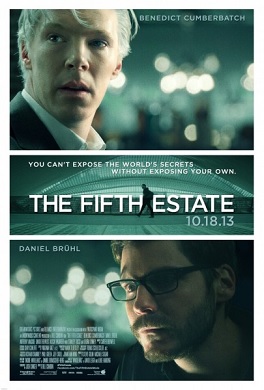
The first half of the film focuses on Julian Assange (Benedict Cumberbatch, or as Jeremy Jahns brilliantly describes him 'Cumberbleach') founding Wikileaks and gradually building up its reputation with the help of Daniel Schmitt (Daniel Bruhl).* As you'd expect Cumberbatch is extraordinary, capturing the authentic vocal inflections and dominating presence that Assange appears to have. Bruhl is less captivating but then this isn't a particular surprise. For one, he is by far the least interesting character and, not surprisingly, the one we are more familiar with. This means that the relationship they have in the film comes across much like Nick Carraway and Gatsby in The Great Gatsby; the central character, fascinated by an elusive and uncommunicative figure, finds himself over his head when involved in the unusual events the mysterious figure is involved in.

Unfortunately, this isn't as good as it sounds. Great as Cumberbatch is, we never get a foothold of his character. This is not necessarily a problem except that as soon as the major events occur in the second half of the film, we are expected to understand his character enough to feel the dramatic importance of the revelations. As such, the film seems to be in two minds about Assange - whether to treat him as an elusive, Gatsby-like figure, or to make him a fully rounded character to lock heads with Schmitt over important decisions. The very final scenes then go on a completely different track altogether. Perhaps all this shows how difficult Assange is to place as a character. This would be fine in a straight biopic but it is just frustrating within the drama the filmmakers appear to be trying to make, and to be honest, I'm not even that sure what type of film they're trying to make now I'm trying to write about it.

This indecision also affects Schmitt. The films attempt to go into thriller territory in the latter half relies upon him selling the threat. However, the character is so constantly confused and in the dark about everything, we end up feeling as clueless as he does. Despite Bruhl's best efforts, the character does not leave a lasting impression. However, at least he isn't as poorly treated as Alicia Vikander is playing Schmitt's girlfriend, Anke Domscheit. I had to look up her character name so unimpressionable was her character. In fact, I'm not 100% sure I've got the right character. She is set up to be Schmitt's moral conscience, someone to remind him how his work is affecting the world. But in the film, she exists to do specific acts: shout at Schmitt, be angry at Assange, mope occasionally, and have sex with Schmitt. What an absolute waste of a character. Not many people seem to be talking about the sexual politics of this film, but I'll just say that when the prominent female character spends most of her scenes kissing the protagonist and being abandoned by him post-sex, it becomes an unfortunately major problem.
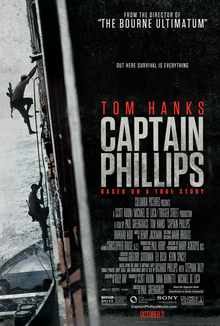
Thankfully, Captain Phillips does not leave such a disappointing taste afterwards. It just leaves you in awe and shock. A much preferable reaction I'm sure we'd all agree. Marine Captain Richard Phillips is undergoing a typical cargo mission when he strays too close to pirate territory and finds his ship under threat. I'll avoid any more plot details because frankly, it's unnecessary to go into it. The film is a thriller, hence some people may be able to see where it is going even if they didn't know the true story. I have to say I was always on tenterhooks. While a part of me was thinking, "It'll be fine. It's a thriller with Tom Hanks. Everything will turn out alright", the film constantly made my stomach plunge as Phillips is put to an ever increasingly desperate situation. By the time the credits came up, I needed a deep breath.

So clearly, the film is an excellent thriller. But as Paul Greengrass did so well in United 93 (another film which is difficult to endure but oh so rewarding), the thriller aspects are given more heft by fantastic drama. The two captains oppose, reflect and feed into each other. Everyone is saying how fabulous Tom Hanks and I'm not going to deny that. He is excellent and plays a role as I have never seen him before. So vulnerable, so flawed. But he is matched and at times outstaged by the truly excellent Barkhad Abdi as the pirate captain. In fact, the whole crew is superb, and are so believable and well rounded that a part of me wanted them to, not necessarily succeed, but come out all right.

While both films boast excellent performances throughout the entire cast, I felt that Captain Phillips brought me in confidently and somewhat brusquely into the situation. Not for one moment did I have absolute certainty of what would happen next or even what I could have done in that situation. It was engaging and involving in the way The Fifth Estate wasn't with all its bombasity and self-importance. Greengrass knew exactly what he was doing; I feel Bill Condon had more of a struggle with his material, which is understandable. A hijacking film seems easier to pull off as a drama then the Wikileaks scandal. But that would be too dismissive of Captain Phillips, which is truly an excellent film and everyone should go see.
If you need a Dumb Person's Guide to Wikileaks, as I did, The Fith Estate serves fine. It is a perfectly efficient film but not a particularly memorable one.


*I would just like to note that obviously the intricate details about the founding and running of Wikileaks is constantly debated. I am summarising the story of the film rather than trying to explain the reality, of which I know little of, as I'm about to explain...

Friday, 23 August 2013

Film Catchup: Midnight in Paris

As my first Woody Allen film, Midnight in Paris was as charming as I hoped it would be. I understand that this film was generally considered as a return to form for Allen, which is interesting as the film is not without flaws. The film focuses on screenwriter Gil Pender (Owen Wilson) who is on holiday with his fiance and is trying to get his debut novel to work. Frustrated at the distractions of reality, Gil discovers that at midnight Paris turns into some sort of gateway to the 1920s, to Gil a veritable Golden Age of artistry. I say a 'sort of' gateway as the film doesn't explain it and revels in the ambiguity of Gil's time-travelling ability; is it real or is he just deluding himself in nostalgia? This film is about artistry and the beauty of art. But incredibly, the film isn't as pretentious or introverted as I've described it.

True, I didn't get every reference to the literature and art of the 1920s but I still found the film delightfully witty. I've never seen a Luis Buñuel movie or even knew who he was (a surreal artist, from what I gather) before watching the film, but I still laughed at Gil suggesting a plot for a film ("But why can't they leave?"). All the other artists that Gil meets (who I won't name, because it is fun to see who turns up and everyone will recognise at least two of them) are entertaining and engaging when on screen, but the focus is very much in Gil.

Owen Wilson is really terrific here. Yes, he's funny but he also convinces as a man who is more interested in artistic issues from the past than the issues in his real life. There's a lovely moment when he only realises something about his wife when he's given a critique of his book. As I said earlier, this could've been a really pretentious, unlikeable character but Wilson shows the character's excitement in talking to his idols that allows you to sympathise with his desire to abandon the present to enter the world of the past.

Perhaps due to the short running time, the characters in the real world aren't particularly well fleshed out as the film has more fun in messing about in the 1920s. And I can't blame them as they are really joyful and the best parts of the film. Gil's marital troubles don't quite have the dramatic heft to really work and it is here that the film should have been less flippant and more dramatic. But in the end, it's just a terrifically enjoyable film that really charms.

Friday, 16 August 2013

Film Catchup: Reservoir Dogs and Pulp Fiction - The Best of Quentin Tarantino?

As I explain in the sidebar, I am always catching up on films, books and television. It's gotten so bad that I've started a new thread on this blog dedicated towards catching up. As such, I regularly have to defend myself from playful shaming that I haven't seen Trainspotting or Fight Club or Avengers Assemble or (worst of all crimes) Game of Thrones. Those examples are regular subjects of these conversations because everyone I know has seen them, apparently. It's now got to the point that I've decided to avoid these conversations and join in on the fun ones - the ones where you can talk about what you enjoy rather than the ones everyone else enjoys. And starting off are Reservoir Dogs and the film which nobody I know actively dislikes and always tell me to watch, Pulp Fiction.

 I'll get to Pulp Fiction later because, even though I watched it before Reservoir Dogs, seeing them both has made me think about them in an interesting way. Or at least something worthy of a blog post. Now, these aren't my first Tarantino films. In fact, my first was his latest one, Django Unchained, which I have seen twice. I've always been fairly squeamish about explicit and bloody violence in films, hence why it's taken me so long to watch a Tarantino film. Django then was a way for me to test the waters, to see how well I could cope. Not only did I watch the whole film untraumatised, I really enjoyed myself. So I figured I'd be able to cope with Tarantino's previous work, and what better place then to go back to the beginning, to the films that made his name?

Safe to say, Reservoir Dogs is a very different film. It's a heist movie that doesn't show much of the heist itself, instead focusing on the men involved and how they treat each other before and afterwards. You can see the techniques, the snappy dialogue, the complex characterisation, and the excellent performances that are signatures of Tarantino's style. Even only watching three of his films, I am aware that he has a certain style of filmmaking that he is very good at, and seeing his debut in the light of later works they're fairly easy to spot. Indeed, I think this is his best film.

The dialogue, the characters, the violence, they are all fantastically executed and feed into the dark and dangerous world Tarantino creates. You invest in these characters and as attracted to their personalities as you are repelled by their actions. The famous ear scene deserves its reputation, a fine example of the uncomfortable and tense atmosphere of the film. The simplistic technique of using an upbeat song (and a song that I really like) for a scene of horror is incredibly effective. I've no idea if its the first film to use this technique (I'd be interested if anyone knows of a earlier example) but nevertheless, I've decided to call it the 'Stealer's Wheel effect' since I've seen it used in many other films and television shows. (Psychoville uses it particularly well in some of its episodes).*

While this is a well regarded film, it is largely overshadowed by Tarantino's subsequent film Pulp Fiction. Now, I found this much more enjoyable than his first film, but is it a better film? Well....


Like Reservoir Dogs, Pulp Fiction has a non-chronological narrative, exploring multiple storylines that beautifully fit together. Tarantino shows such skill in using this style of narrative that it makes Django Unchained look simplistic in comparison. But Pulp Fiction similarly looks simplistic in comparison to its predecessor. It is a brilliant film and much more fun to watch than Tarantino's debut. There's still extraordinary and uncomfortable scenes of violence, overdosing and a gimp, but Pulp Fiction is generally having fun with its shock moments, as the title would suggest.

But as such, it doesn't pack as much of a punch as Reservoir Dogs. There are disturbing moments and some fantastic drama (Bruce Willis, one of many incredible actors in the cast, does extraordinary work as a boxer looking for his father's watch with the desperation and violence of the character a constant threat), but the overall tone is set by the fantastic pairing of John Travolta and Samuel L. Jackson as two hitmen. Their conversations about burgers, divine intervention and whether massaging feet counts as an affair are funny, snappy and incredibly entertaining. But unlike the previous film, Tarantino uses his good ear for dialogue for little more than flippancy and snappy one liners. Compare Mr. Orange's performing an anecdote to convince Daddy's gang to accept him. The fantastic moment when we see him simultaneously acting out the event and describing it is genius and hints beautifully at how the character's mind works. Just before they meet their victims, Sam Jackson tells Travolta, "Let's get into character." That's it - we don't get any understanding or awareness of how they create their personas.

This summarises some people's problem with Tarantino's recent work: he's squandering the talent he has by just referencing other movies, including his own. I now get the "tasty beverage" gag in Django, but as such the line now seems just a reference rather than a display of Candie's callous attitude about his atrocious behaviour. Indeed, Django now seems even less remarkable a film than I thought when I first watched it. Now that I've seen Tarantino is capable of tackling complex scenarios and issues, to see him treat slavery so superficially is disappointing. It doesn't explore the issues of slavery in any depth beyond stating, 'Wasn't slavery a bad thing?'. Sam L Jackson is again phenomenal as is the equally loathsome Candie, Leonardo DiCaprio almost unrecognisable. Christoph Waltz steals the show as Waltz and Jamie Foxx is powerful as the lead. But beyond a checklist approach (it looks nice, the violence is well executed), I can't muster much enthusiasm about Django beyond 'I enjoyed it'.
Now this isn't a problem as such - I've enjoyed all of Tarantino's films but any sign of genius he showed in his first film has diminished as he wastes his talent.

Now I haven't seen Jackie Brown which from what I heard was his last really great film (although I enjoyed Django and intrigued by Inglorious). If there are any Tarantino fans or film fans or people of good taste (I reckon you fall into at least one of these categories), do you have any suggestions of where I should go next? To do as so many others do and paraphrase Tarantino's dialogue, he had my curiosity but now he has my attention.

*Friends of mine have since pointed out that A Clockwork Orange, which predates Reservoir Dogs, uses 'Singing in the Rain' for a similar effect. Having been unsettled by the book, I'm gradually building up courage to see an attempt at visualizing the book, hence my not mentioning it. When I do, expect a post - I doubt I'll be able to resist. Oh and I'll rename it 'the Clockwork Orange effect', just to satisfy myself if not anyone else.

Friday, 21 June 2013

Film Roundup: Enjoying yourself is a serious matter. Sometimes. (Behind the Candelabra, The Stone Roses: Made of Stone, After Earth)

Like the star of its story, Behind the Candelabra revels in its ability to entertain its audience but also uses its glamour to hide dark and personal demons. Swinging between comedy and drama with speed and ease, the film explores the glitzy and bizarre world of Liberace (Michael Douglas), the flamboyant piano player and entertainer who hid his sexuality in plain sight. The story is told through the eyes of Scott Thorson (Matt Damon), who finds himself employed as his companion. Michael Douglas is an obvious standout as the character demands attention anyway. While Douglas shines as Liberache the entertainer, he proves to be just as skillful in displaying his manipulative manner and desperation. As we peel back the layers on the man (at times quite literally), he becomes increasingly complex and almost unnerving; he is a man who is unafraid to do as he pleases and damn the consequences.

This effect would be significantly less powerful were Douglas not equalled, and at times surpassed, in performance by Matt Damon as Scott. He is arguably the main character here as it is very much his story (the film is based on Thorson's autobiography) and much of the film explores Scott's repulsed attraction to Liberache's personality. We learn far more about Scott than we do Liberache, and is arguably more sympathetic. Damon has never been better and convincingly portrays how Scott's life revolves around Liberache. However, while Damon and Douglas are extraordinary, every scene they share with Rob Lowe's hilarious plastic surgeon is stolen from them. While his face displays almost no expression at all, Lowe is absolutely wonderful and utterly memorable despite his little screen time.

In contrast to the awkward switch of genres in Side Effects (director Steven Soderburgh's previous film, which he claimed to be his last), Soderburgh is much more sleek here with sudden cuts and transitions rarely awkward and creating an impact, whether they be comic or dramatic. One of my favourite films this year, but I wish I knew less about it before I went in. Knowing the basic story from the trailer, the foreshadowing early on of Damon's plight was obvious and subsequently didn't have the full effect it should of had. Nevertheless, I thoroughly enjoyed this film on every level - dramatic, funny, stylish. I couldn't of asked for more.


Unfortunately, I didn't enjoy Shane Meadows' latest film and first documentary The Stone Roses: Made of Stone as much as I wanted to. Don't get me wrong, it is a very enjoyable film. Meadows very easily fits into documentary filmmaking as you'd expect from the skilled director of This is England. He's clearly enjoying himself and it is striking how even the real life people he interviews seem to resemble the characters of his films.

Indeed, it is clearly a film for these fans although it doesn't completely alienate those who are unfamiliar with the Stone Roses, such as myself. I did enjoy the songs and you get plenty of them - about half the running time is essentially concert footage. Meadows uses the standard documentary technique of going back and forth in history to track the history of the Stone Roses but also really builds up the impact of their return as a historical event and also shows how they haven't seemed to have really changed much over 20 years.

However, just enjoying the music isn't enough, I feel, to truly appreciate this film. It does remarkably capture the joy of being a fan and the rush you get when seeing live music - lots of great memories came flooding back to me of wonderful concerts I've been to.  But while it is charming, I agree with one of the fans when he tells Meadows why he loves the Stone Roses: "You know, I know, but you can't put it into words". I can appreciate the film and the fandom at the heart of it, but since I can't relate to it, I'm always at a distance.

After Earth on the other hand is just underwhelming completely. While Meadows remains superb when experimenting with genre, M. Night Shaymalan seems to be on a downward trend although he hasn't lost all the innovation he showed in The Sixth Sense. The film is visually attractive and it is not without interesting ideas - the father/son relationship in the film goes on an interesting arc and the Will Smith character's conflict between appearing strong and wanting to express emotion has potential to be really powerful. But as you might notice, I don't even know the characters name and I really can't be bothered to recount the plot (bad reviewing I know, but I also struggle to remember it and I only saw it last week). Basically, Jayden Smith has to fight for survival on a devastated Earth and is less exciting than that sounds. (And it doesn't even sound that exciting). As much as there is interesting stuff in there somewhere, it's so dully executed it is not worth trying to pay attention to them since the film clearly doesn't either.

What's annoying is that it is not awful, it is just very, very average. There is no tension or scares beyond annoying jump scares. While it is a serious drama, it takes itself far too seriously and doesn't allow the survival action scenes to be exciting or thrilling, just gruelling. It seems Shaymalan is so desperate to express deep ideas through imagery, he ignores any sense of fun. The few moments Will Smith is not spouting exposition are deathly dull with only one line allowing him to express any human emotion. His son doesn't fare much better, who struggles to get anything interesting out of his character. The interesting character background is incredibly disjointed to his present self who is just scared all the time. In the end, it's just a very dull film which is arguably the worst thing a film can be.

Friday, 14 June 2013

Film Roundup: Don't judge a movie by its poster (The Purge, Byzantium, Populaire)

Yes, this is technically a week late but these films may still be around by the time you read this. Anyway...

Everything about this poster seems to scream at a mainstream audience to like it. Referencing two popular and memorable films (which I haven't actually seen), and encouraging the use of a hashtag demonstrates an attempt at manipulation that could put someone off. The premise is straightforward, the running time is just under 90 minutes - how can this film offer anything substantial? It appears to be just a throwaway thriller. Even Jeremy Jahns says so. However, the film does not totally ignore its interesting premise and actually uses it to provide a social commentary on modern America, sort of. Within the film, the purge is shown to work and so the immorality of the situation is irrelevant to the characters. Presented with this moral vacuum, the audience is left to consider it instead, and gradually the characters begin to do so too.

Instead of exploring this big idea in a similarly grand style, the film goes small and focuses on how this situation would be experienced. As such, the big idea is somewhat muted as it is so grand that it makes one wonder what is happening outside of the house. While at times this means it falls back easily on a standard house invasion thriller, it also allows for interrogation of the characters' psychology and ask why people feel naturally inclined to murder. Unfortunately, as intellectually stimulating as it is, it is often unsubtle in its attempts to communicate its ideas, too easily resorting to clunky dialogue and blatant exposition. Nevertheless, in its basic setup, it could be argued the film takes the traditional American family model and challenges it by placing it within an extreme situation. Indeed, despite their dysfunctions, they resemble recognisable tropes (working father, housewife mother, stroppy teenage girl, isolated but creative boy). This interpretation doesn't seem too much of an over-reading in a film that addresses some intelligent ideas, but also explains why the characters are fairly two-dimensional. As such, the incredibly short running time seems to not fit the grandness of the central concept and fits the house invasion thriller film better.

However, in the latter half it all fits perfectly. It never feels boring and doesn't outstay its welcome - if much longer, I would have probably sooner lost patience with the film and its clunky dialogue. While the opening ten/fifteen minutes or so drag, the film soon kicks into gear and the tension becomes palpable. The film does fall into the trap of occasional unnecessary dramatic stings, which seems to be a consistent problem with recent films that require tension. They seem to rely on the 'long periods of quiet AND THEN A SUDDEN NOISE' technique (commonly known as 'jump scares') which really grates after seeing it hundreds of times. Nevertheless, when the ideas match the style, the film is as unsettling as something like Right at Your Door, which similarly combined thriller with social commentary.

Similarly intellectually stimulating is the new film from Neil Jordan, Byzantium. I am only familiar with one other Jordan film, The Company of Wolves which Gemma Arterton, the lead in Byzantium, said is one of her favourite films. With the quotes on the poster and the horrific imagery of that film in mind, I expected something very different that I didn't really get. Far from disappointing, Byzantium takes the traditions of the vampire and uses them to explore the tragedy of being the living dead. There is plenty of gory imagery, the most spectacular of which is very early on (you have been warned) and a really innovative (and unnerving) method for vampires to feed.

However, the overall tone is melancholic and sombre, which may bore some people. Stick with it though and you are rewarded with some fantastic characterisation of the sympathetic mother and daughter. Excellently played by Saoirse Ronan and Arterton, the mother/daughter relationship is incredibly moving and is very much the heart of the film. To call it "Twilight for grown-ups" is understandable but silly. While there is a love story between a human and a vampire, it has a dangerous and uncertain edge that is riveting even if Caleb Landry Jones overacts a bit too much. Sam Riley and Jonny Lee Miller contribute to the traditional vampire story that is told in flashback by Ronan, who finds her relationship with her mother strained by her mother's past coming back to haunt her.

Yes, it plays with the traditions of vampire lore but it isn't designed to scare. Like The Purge. it's not a film for mere entertainment as the posters suggest, but provide food for thought and ask the audience to think about what they've just watched. They're not too serious though and understand the genres they are in, which allows for a nice break between the thoughtful stuff.


Meanwhile, Populaire is exactly what the poster suggests - a frothy French comedy which harks back to 50s comedies. It's a straightforward, predictable plot but the leads are engaging and you care about their relationships. Its shot very stylishly with great attention to period detail. It does make typewriting contests exciting but also give a knowing wink at how absurd the idea is. Very enjoyable but not one to desperately seek out.

Friday, 14 October 2011

Watching and Reading 'Jane Eyre'

Novels with a classic status which were written in the 19th century are assumed to be of a high quality and worthy literature. The undeniable difference of writing style can jar with a modern audience, as they will be more aware of the ideas and themes that the novel created. So the concept of the unreliable narrator and the mad woman in the attic (pretty much the only thing that made me want to read the novel) cause less of a shock then when originally published. So is 'Jane Eyre' still worth reading, and what impact has the recent film adaption made on it's popularity?
 
 Jane is a child who is constantly mistreated and misunderstood by adults. Then at 18, she enters the household of Mr Rochester and encounters a very different kind of gentleman. Despite being a very simple story, the novel is not an easy read and does take a long time to get through. But as with all these period novels the length is justified by creating well-rounded characters. They all have a distinct personality that prevents confusion, and as such easily allows the reader to either loathe them (such as Jane's adopted family as a child or John Rivers, a later guardian) or love them (her aid Mrs. Fairfax and Jane's childhood friend Helen). However it is clear from their first meeting that the focus of the story and our emotional involvement is with Jane and Mr. Rochester.

By having Jane narrate the story, we are allowed an insight into two seemingly impenetrable characters. Apart from with Mr. Rochester, her relationships with the other characters rarely allow her to release her emotions and thoughts, due to her low social status. They do not expect great things from her or any sense of humanity; she is just a governess, a servant, a woman. But neither does she appreciate being patronised or insulted; she has a strong personality and force of will, which only the reader and Mr Rochester are aware of. On the other hand, Mr Rochester is impenetrable because everyone wants to know and understand him but he chooses not to - except for 'plain' Jane.

It is very difficult not to be enraptured by their blossoming romance, especially if like me you are a sucker for that type of thing. It is possible to take a completely different reading and claim that their relationship is mostly based on tension, particularly with the mood swings and secrets of Mr Rochester. However this tension is often read as merely the romance being left unstated by the characters, which you wouldn't know was there if Jane didn't suggest it in her narration.

 While this is relatively unclear in the novel, the recent film adaption captured it perfectly. Like the book, by far the best thing about the film is the performances by Mia Wasikowska and Michael Fassbender in the lead roles. For some peculiar reason, I had never imagined Jane with a Yorkshire accent, but Wasikowska was so fluent that it seemed natural and makes perfect sense, emphasising her separation to the rigid higher members of society. Throughout you are completely devoted to her character's plight, especially as we are introduced to her fleeing from the house of Rochester - a brave move but very effectively allows the story to feel fresh to those who already know the story, and provides a dramatic start for new comers.

Initially I became worried that the depth of the character would not be explored. It's innovative structure means it glosses over, perhaps too quickly, her school days. While the focus on the major set-pieces are captivating (the death of a friend, her punishment by her 'headmaster') we gain no sense of how important this environment was to her development, making her departure seem rushed and unmotivated. Nevertheless this approach pays off when the story ups a notch with the introduction of Rochester in a breathtaking Gothic sequence. By focusing on the major set pieces of the novel, with character development in between, the film provides the story with brevity that hopefully will pique the audience's interest in the novel, which provides a more detailed exploration of the characters.

The real highlights though are when the themes of the book are visualised on screen. They both explore the idea of humanity in nature, and how Jane in particular cannot resist what feels natural to her, rather than what is expected from her. While this is referenced in the book through Jane's inner conflict, the film actually places her in the middle of wilderness and moors - the images naturally recalling those depicted in 'Wuthering Heights by Charlotte's sister, Emily.

I could spend far more time describing the similarities between those two novels, but it's all been done before. Even though I prefer 'Heights' for it's unashamed Gothic darkness and ferocity, I did enjoy 'Jane Eyre' despite it's relatively lighter tone. It is well worth reading and deserve it's classic status purely through producing two captivating characters involved in a timeless and enduring romantic relationship.

Monday, 19 September 2011

Reading 'It's Only a Movie: Reel Adventures of a Film Obsessive' by Mark Kermode

 For the life of me I cannot recall why I chose to listen to Kermode and Mayo's Film Review Show. All I can guess was I had reached the age where film was of actual interest to me rather than just something I like watching, both of which it remains. It was summer or at least a holiday. It was a Friday, sometime between 2pm and 4pm. That's all I can recall of my motives. What I definitely know is I've never looked back.

Entertaining and enlightening, Mark Kermode's film knowledge is clearly limitless but he isn't a bore, at least not often. The number of references and mini-reviews available within these 300 odd pages is impressive and usually irrelevant. However far from distracting, this is very much Kermode's style as the book is essentially his voice transcribed and made slightly more comprehensible.

A self-admitted fictional autobiography, there is no guarantee the anecdotes Kermode tells are 100% accurate. In a strikingly post-modern sequence, he takes a break from writing the book to watch a film to check he remembered a scene correctly! And this is on the low-key end of absurdity. Some of the stories sound far-fetched but there is something strikingly honest about his story telling. Say what you like about his opinions and reviews, he knows how to keep an audience entertained.

In the least back-handed way possible, the book is very easy to read. As I say he manages to capture his own voice perfectly (not as easy as you may think) and his casual tone makes it feel you personally are being told this extraordinary story by an old friend. Literary it ain't, incisive criticism isn't here either despite his previous reputation and his latest book ('The Good, The Bad and the Multiplex') seems to be in that vein also. This is just a fine diversion that left me laughing to myself for a few hours and left me thoroughly entertained, with a smidgen more insight into the peculiar world of Mark Kermode.

Still prefer the original cover though: